
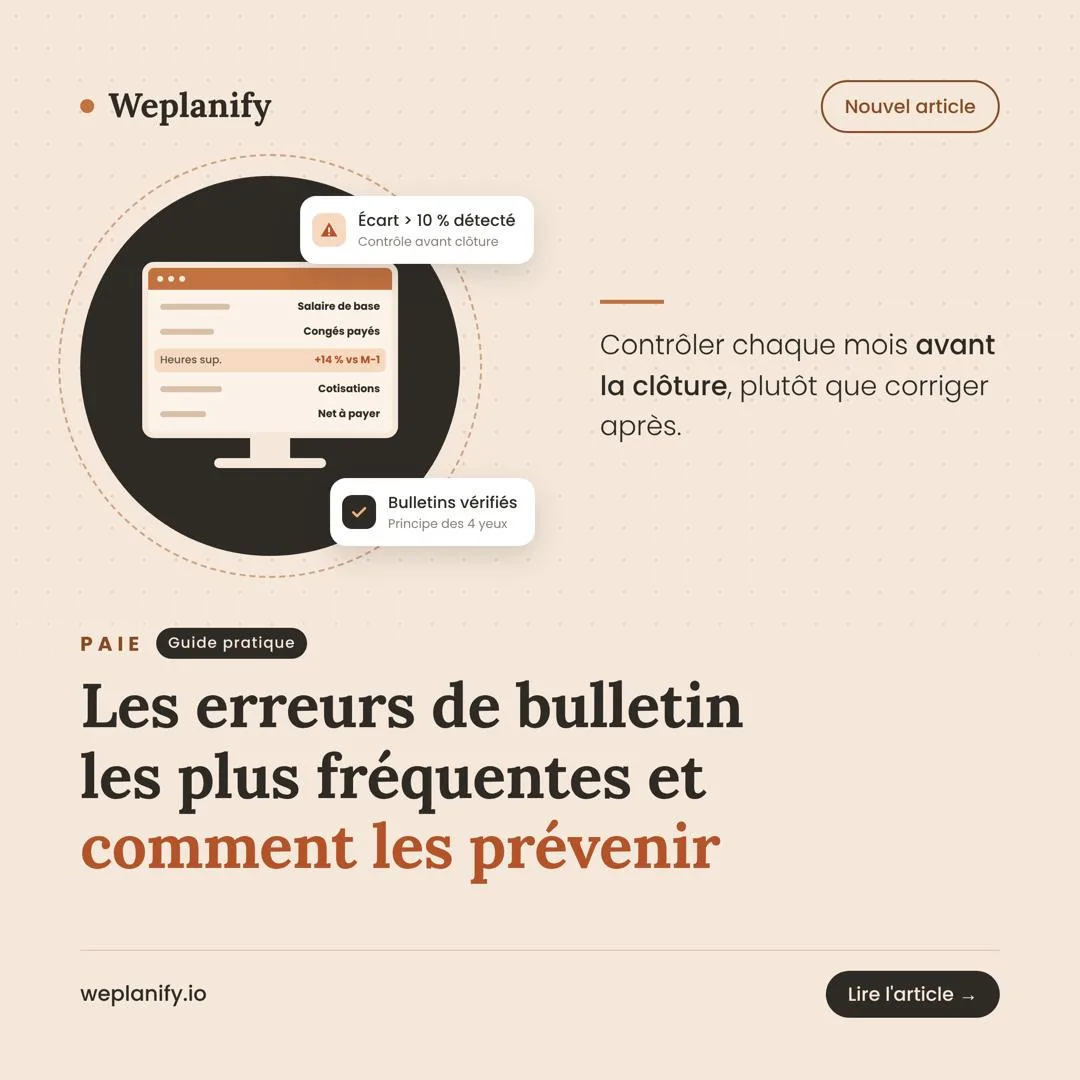
The payslip is the most widely read and most contested HR document. An error can prove costly in terms of back pay, adjustments to social security contributions and loss of trust. Most of these errors recur from one month to the next and can be avoided.
The most common errors
- Overtime.
Statutory premium rates often cause problems. Errors frequently stem from an incorrectly applied weekly calculation, an overlooked annual quota or a failure to properly track compensatory time off.
- Paid leave.
The entitlement must be calculated using both methods (continued pay and one-tenth of gross remuneration) and the method most favourable to the employee must be applied.
- Bonuses and variable pay.
Seniority bonuses, thirteenth-month pay, meal allowances or on-call allowances: the most common mistake is failing to apply the collective agreement or using an incorrect basis for calculation. It is also necessary to check how bonuses are treated in the event of absence, which must comply with the principle of non-discrimination.
- Absences and sickness.
Subrogation of daily allowances, qualifying periods, continued payment of contractual or statutory pay, and occupational health cover: these mechanisms can overlap and are a source of errors, particularly during long-term sick leave or on return from maternity leave.
- Minimum requirements and staff turnover.
Salaries below the statutory minimum wage (SMIC) or the collective agreement minimum following a pay rise; incorrectly calculated pro rata payments for staff joining or leaving mid-month; incomplete final pay statements (covering holiday entitlement, notice periods, and allowances): these are common errors during staff turnover.
- Benefits in kind and expenses.
Company cars, accommodation, meals, reimbursement of expenses: the valuation and payroll treatment of these items follow specific rules, and failure to comply with them will result in adjustments during an audit.
Implementing checks before closing the accounts
Prevention involves a simple routine, carried out every month before payslips are approved:
1. Check the data entered: new hires and departures, absences, hours, bonuses, advances and instalments.
2. Compare each payslip with the previous month’s and analyse any discrepancy exceeding a defined threshold (for example, 10 per cent).
3. Have a sample of payslips checked by someone who did not process the payroll (four-eyes principle).
4. Reconcile the total payroll figure on the payslip with the accounts.
5. Update the parameters whenever there is a change: minimum wage (SMIC), contribution rates, company-wide agreements, or amendments to collective agreements.
6. Document any exceptional decisions (adjustments, individual benefits) to maintain a record in the event of an audit.
Correcting an error
As soon as an error is detected, it must be corrected promptly and transparently: by adjusting the next payslip with a clear note, informing the employee, etc. In the event of an overpayment, deductions from salary are subject to specific rules: they are limited by the regulations governing the attachment and assignment of earnings, and an amicable repayment plan is often preferable.